Time:2020-03-11|
View:1809|
Copyfrom:
This year, we see a steady increase in the supply of OLED TVs. In addition to Korean manufacturers LG and Philips, which have already launched several OLED TVs, this year includes Panasonic and Omar TVs with OLED models. In addition to imported brands and domestic brands, OLED TV is also widely promoted, so the price is increasing, but which TV should you choose? LCD LED TV or OLED TV? We have listed the main differences between LCD LED and OLED for you.
LCD TV?
You may want to know why we use the word "LCD TV". Simply put, led TVs don't actually exist, but manufacturers use the term. LED TV is actually LCD TV, but it has LED backlight. LEDs are not CCFL lighting, but are placed behind the panel to illuminate the entire panel. At present, almost every LCD TV is equipped with LED background lights, so the term "LED TV" is often used.
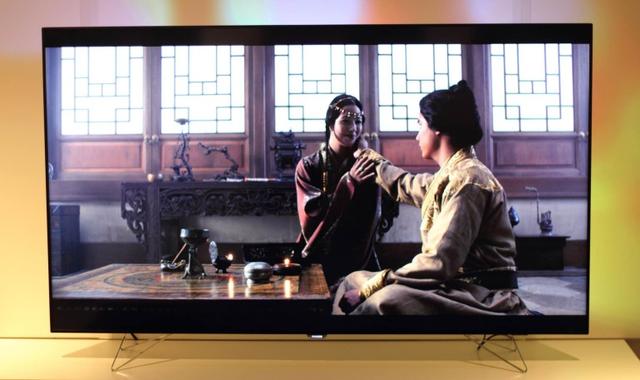
LED lighting can be placed around the edge behind the display (edge lit LED lighting), or directly in the array behind the panel (full array LED lighting). The latter technology is often used in high-end models because it provides deeper black levels and higher contrast in most cases. In addition, the LCD TV may include an IPS panel or a VA panel. IPS panel can provide relatively low contrast but wide viewing angle, while VA panel can provide good contrast with relatively small viewing angle.
What is OLED TV?
We will save you the exact technical specifications of OLED display, but OLED consists of many small diodes (lights). Diodes are very small light sources, and their organic components emit light by themselves. The technology does not use backlight because the pixels themselves emit light when the charge passes. With the help of thin color filter (RGBW) and adjusting the intensity of diode, color can be displayed. LCD LED TVs use background lighting as described above, so they cannot be as thin as OLED TVs. In short, OLED TV's pixels themselves provide light.
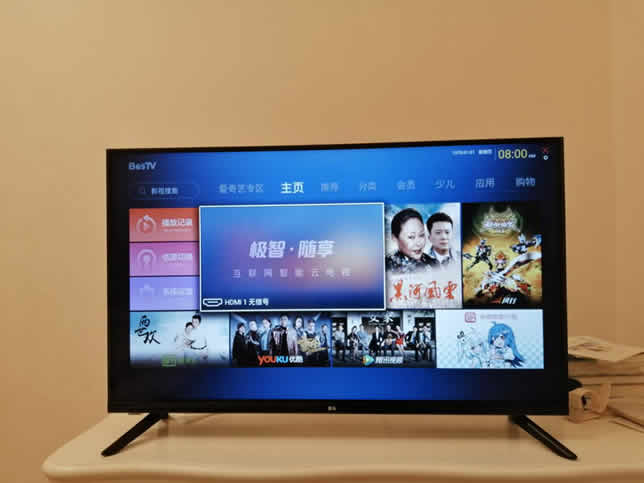
Differences between LCD LED TV and OLED TV
There are many differences between OLED technology and LCD LED technology you see in the store and between LCD LED TV and OLED TV. We focus on the following key differences.
Picture quality
The difference of image quality is mainly reflected in black level and brightness area. OLED TVs have pixels that can be turned on and off individually, making black really black. LCD LED TVs have a backlight that is always on (partly in the case of local dimming), so black is usually opposite to gray. (local dimming means that several areas (LED groups) can be controlled / operated separately. One area can be turned off, while another area can emit bright light. The more areas, the higher the contrast, the darker the black. )
In addition, since each pixel is controlled independently, OLED TV has infinite contrast. LCD LED TV is limited by a continuously lit backlight, which affects contrast. The more LED areas you can control (local dimming), the higher the contrast. One part of the screen may be bright white in multiple areas, while the other part may be dark black. However, due to the use of this technology, LCD LED TVs always appear more or less "floodlight" phenomenon, in the dark background around light objects will appear slightly turbid. Again, this technique can reduce the level of detail in the dark areas of the screen. This is always a compromise, because not every pixel can be checked separately.
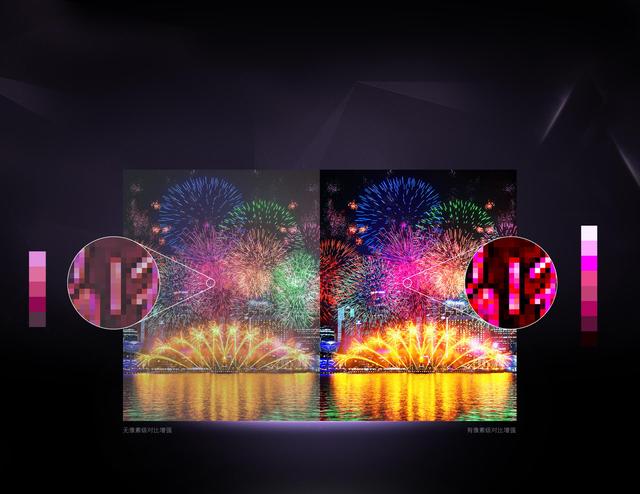
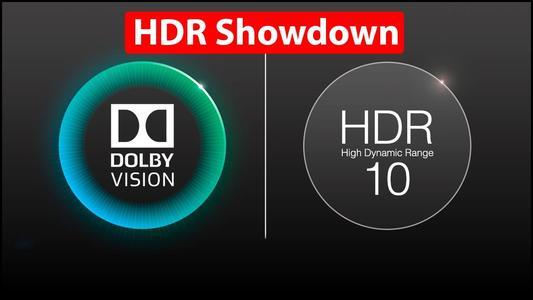
However, LCD LED TV has advantages over OLED TV. The advanced models that support HDR can provide higher brightness, even more than 1000 nits. However, the higher the brightness, the more difficult it is to retain dark black, so black can be gray again. For OLED TVs, the more pixels you have to burn completely, the more difficult it is to display bright white. Therefore, when using a full white screen, the brightness should be less than 10% white. The peak luminance of OLED TV is about 700 nit. However, it still retains the advantage that the pixel next to the white pixel can still be dark black (which cannot be realized by LCD).
The uniformity of the screen is also an important part, especially in full black or color even images, we will see this. LCD LED TVs with LED edge lighting may suffer from backlight bleeding (edge light flow) or turbidity (spot on the screen). For full array LCD LED TV, there is still frost (haze around light objects). The first generation of OLED TVs also had problems, including visible vertical lines or spots. For the current generation of OLED TVs, the ratio has been reduced to almost zero
In terms of resolution, there is no difference between OLED and LCD LEDs. Both technologies can display resolutions from full HD to 4K Ultra HD. In the future, we will also see 8K Ultra HD resolution through these two technologies.
High dynamic range
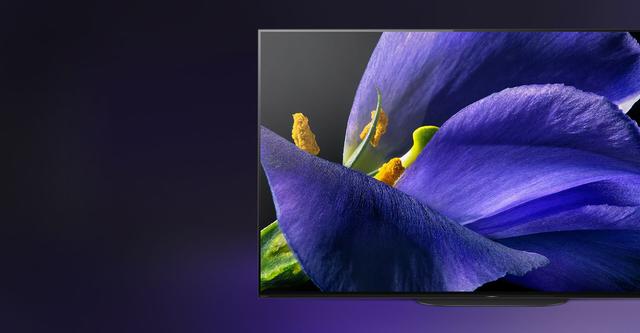
The high dynamic range is completely hot, with dark black combined with bright white. In terms of brightness, LCD LEDs have advantages, which are usually shown by manufacturers in demonstrations. LCD LED TVs can be impressive in showing plenty of sunlight, but on the other hand, it's usually at the expense of dark black. The more areas you have with LEDs, the less likely you are to suffer from this, but the problem is always more or less there. OLED TVs can't be as bright as LCD LED TVs, so (for some people) they're less impressive. However, OLED TVs can perfectly combine bright parts with dark black to compensate for lower brightness displays.
Motion blur
A common problem (found on almost every TV) is that objects in fast-moving images or pictures get stuck or blurred. LED LED TVs have a variety of technologies to make these movements as smooth as possible (including scanning backlight), but image jamming or blurring is still a problem for many people. That's why manufacturers have introduced a variety of sports settings, so that everything can be displayed very smoothly, but at the same time get a soap opera effect. The movie looks so unnatural. It usually plays the biggest tradeoff in settings. OLED TVs should not run into motion problems on paper, but our experience shows that this is not entirely the case. Motion blur is not as good as LCD LED TV, but it still exists. You can also start setting up here to minimize motion blur and find a compromise.
energy consumption
Generally, the energy consumption of OLED TV is slightly lower than that of LCD LED TV. This is partly because OLED TVs have pixels that can be turned on and off individually, which improves efficiency. In a dark scene, because pixels are actually turned off, less energy is used. LCD LED TVs have led backlights that are always on, unless local dimming is used so that the LED pack can be turned off. LCD LED TVs also generally have a higher brightness (an advantage), but this obviously consumes more energy. However, differences in energy consumption will not save you tens of euros a year.
viewing angle
The viewing angle of LCD LED TV depends on whether you are dealing with VA panel or IPS panel. IPS panel usually has a better perspective than VA panel, but it can only be achieved when the contrast is low. OLED TV will not be bothered by a smaller viewing angle because light travels in the same direction. So you can watch OLED TV comfortably from all angles.
Design and dimensions
LCD LED TV has been put on the market for many years, so the production technology has been mature. You can get LCD LED TVs of almost any size, from 24 "to 150". OLED TVs are smaller, from 55 to 77 inches. This is because the production cost of OLED TV is much higher, so very small TV or very large TV will not exit the market soon.
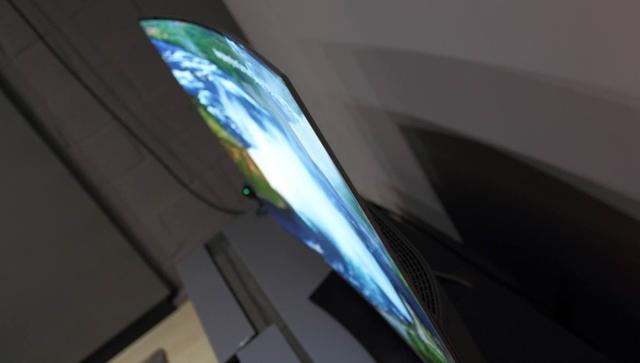
In terms of appearance, we see another important difference. OLED TVs are usually much thinner than LCD LED TVs. This is due to the technology used, so a "thick" backlight is no longer required. The thinnest OLED TVs are just a few millimeters thick and can't be seen at the end. LCD LED TVs with edge lit LED lighting are generally thinner than LCD LED TVs with full array LED lighting because in the latter model, the LEDs are directly behind the panel. This will ensure better quality, but will make the TV thicker. LCD LED TVs with full array LEDs also weigh more than models with edge lit LEDs. OLED TVs can weigh several kilograms less than LCD LED TVs with edge lighting LEDs. However, the weight also depends on the electronics, and OLED panels are so thin that they often have to be reinforced, for example, by glass panels.
Life and aging
The general criticism of OLED is that it has a short life and risks aging. However, life span is not much different from that of LCD LED TV. For the 2016 model, LG promises 100000 hours of service life, by which time you are fully prepared for the new TV. LCD LED TVs shall also be capable of lasting approximately 80000 to 100000 hours. However, OLED TV may face the problem that the intensity of OLED pixels decreases with time. LG said, however, that various algorithms continue to compensate for this, so you, as a viewer, won't notice it. However, the performance of OLED TV after 5 or 10 years remains to be seen. After all, we are not that far away.
In fact, aging is the same. LG said the risk is small (mainly due to the built-in security of the TV), but it will be several years before we know whether OLED TV will be affected. We haven't experienced it ourselves. In theory, LCD LED TV can be developed. So let's assume that doesn't happen either.
Design and dimensions
LCD LED TV has been put on the market for many years, so the production technology has been mature. You can get LCD LED TVs of almost any size, from 24 "to 150". OLED TVs are smaller, from 55 to 77 inches. This is because the production cost of OLED TV is much higher, so very small TV or very large TV will not exit the market soon.
In terms of appearance, we see another important difference. OLED TVs are usually much thinner than LCD LED TVs. This is due to the technology used, so a "thick" backlight is no longer required. The thinnest OLED TVs are just a few millimeters thick and can't be seen at the end. LCD LED TVs with edge lit LED lighting are generally thinner than LCD LED TVs with full array LED lighting because in the latter model, the LEDs are directly behind the panel. This will ensure better quality, but will make the TV thicker. LCD LED TVs with full array LEDs also weigh more than models with edge lit LEDs. OLED TVs can weigh several kilograms less than LCD LED TVs with edge lighting LEDs. However, the weight also depends on the electronics, and OLED panels are so thin that they often have to be reinforced, for example, by glass panels.
Life and aging
The general criticism of OLED is that it has a short life and risks aging. However, life span is not much different from that of LCD LED TV. For the 2016 model, LG promises 100000 hours of service life, by which time you are fully prepared for the new TV. LCD LED TVs shall also be capable of lasting approximately 80000 to 100000 hours. However, OLED TV may face the problem that the intensity of OLED pixels decreases with time. LG said, however, that various algorithms continue to compensate for this, so you, as a viewer, won't notice it. However, the performance of OLED TV after 5 or 10 years remains to be seen. After all, we are not that far away.
In fact, aging is the same. LG said the risk is small (mainly due to the built-in security of the TV), but it will be several years before we know whether OLED TV will be affected. We haven't experienced it ourselves. In theory, LCD LED TV can be developed. So let's assume that doesn't happen either.